

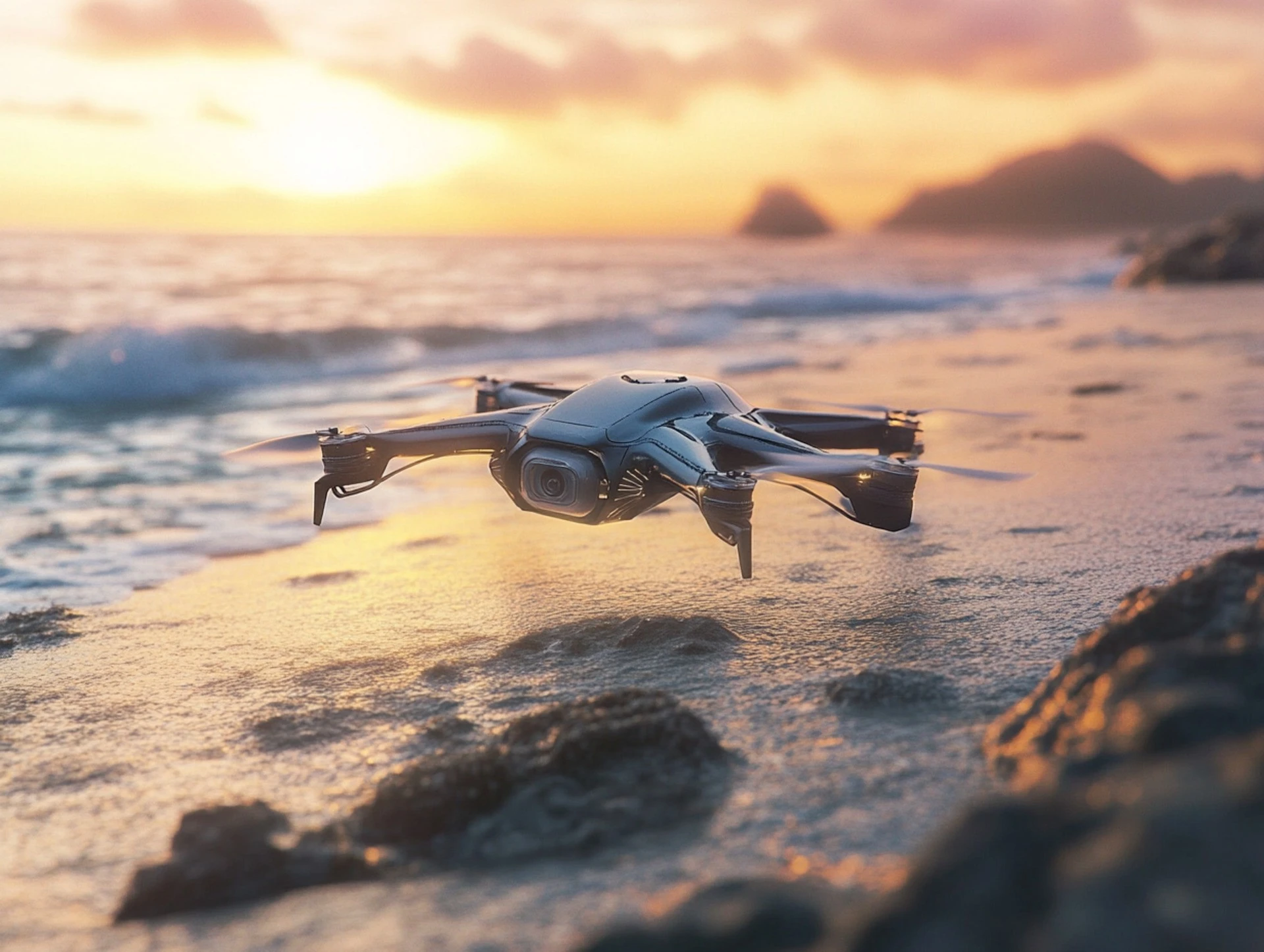
Drones have become an important part of modern life. Filmmaking, farming, and emergency assistance are among the many uses of drones. Unmanned aerial vehicles (UAVs), or drones, have come a long way thanks to new ideas, military needs, and big steps forward in technology. However, where did the idea for drones originate, and who was in charge of making it a reality?
The Early Concepts of Unmanned Aerial Vehicles (UAVs)
The idea of UAVs goes back a lot further than most people think. People often think of drones as new technology, but they have been around since the 1800s. The first time someone thought about making unmanned flying machines for military and civilian uses was during a war when countries were trying to get the upper hand without putting people in danger.
In 1849, Austria attacked Venice with hot air balloons full of explosives. This was one of the earliest known instances of an unmanned flight. These balloons were pretty basic compared to what we have now, but they were the start of a long process that led to the invention of the modern drone. The balloons relied on a straightforward concept: we could send an unmanned, controllable machine into enemy territory to destroy without endangering soldiers. Even though the technology was very basic and difficult to control, it set the stage for more advanced technologies to come.
In the early 1900s, people who were ahead of their time in aviation started to look into how planes could fly without a pilot. The main reason for this research was the military’s desire to use UAVs for warfare and spying. These early ideas about unmanned flight were the first steps towards creating the drone.
The First Military Drones: Early 20th Century
During World War I, drone development picked up speed at the start of the 20th century. The military was looking for ways to use unmanned aircraft to help with combat and surveillance missions at this point. The British engineer Archibald Low made one of the first UAV prototypes in 1916. It was called the “Aerial Target.” The British Royal Flying Corps created this device as a radio-controlled plane for anti-aircraft gunners to use as a target. Even though it was never mass-produced or widely used, it was a big step forward in the history of unmanned aerial vehicles (UAVs) because it proved that radio-controlled flight was possible.
Soon after, the US did the same thing and started making its UAVs. During the First World War, Charles Kettering created the “Kettering Bug,” a bomb-carrying biplane with a simple engine that could fly by itself. Charles Kettering programmed the Bug to fly a specific distance, drop its cargo, and then crash into enemy territory. Despite its infrequent use and reliability issues, this unmanned aerial vehicle (UAV) demonstrated the offensive potential of unmanned aerial technology. This idea would become more important in later wars.
World War II and the Rapid Advancements in Drone Technology
The real progress in drone technology began during World War II. The Axis and Allied powers both saw how useful drones could be for both spying and fighting. For example, the Nazi government made the V-1 flying bomb, which was an early cruise missile with guidance technology and caused a lot of damage in London during the war. The V-1 was not a drone in the modern sense, but it did help unmanned aerial systems get better.
Meanwhile, the US was manufacturing more advanced UAVs. Actor and aeronautical engineer Reginald Denny created the first mass-produced drone, the Radioplane OQ-2. During WWII, more than 15,000 OQ-2 drones were made, and they were mostly used to train people to be anti-aircraft gunners. The OQ-2 was a small radio-controlled plane that helped soldiers get better at shooting down enemy planes by moving like a real target.
UAV technology received more funding in the years following the war. In the Cold War, both the US and the USSR knew how important drones were for strategic purposes. This led to more advanced designs, such as reconnaissance drones with cameras that could fly into enemy territory and return with intelligence data.
The Birth of Modern Civil Drones
Initially, the military was the primary user of drones. In the late 20th century, civilians started to look into the technology. The 1980s and 1990s saw the use of UAVs for non-military purposes due to their smaller size, faster computers, and improved GPS technology.
Many people say that Israeli engineer Abraham Karem laid the groundwork for modern UAVs. When Karem came to the United States, he built the first version of the Predator drone, which is now the standard for military unmanned aerial vehicles (UAVs). When he made the Predator in the 1980s, it was a big deal because it could fly for a long time and send live video back to operators. During the Gulf War and later in the wars in Iraq and Afghanistan, drones played a crucial role in spying and hitting specific targets.
Regular people began to use drones as the technology became more accessible. By the early 2000s, people were using drones for a variety of purposes, including delivery services, aerial photography, environmental monitoring, and farming. DJI, a big company, entered the civilian drone market and made it available to everyone. This gave people new ways to use drones.
The Drone Revolution: A Story of Innovation and Progress
There have been many changes and new ideas along the way, from the first ideas for unmanned aerial vehicles (UAVs) to the advanced drones we use today. From their early use by the military to their current commercial uses, drones have become important tools in many fields. Drone history demonstrates how people have always wanted to push the limits of what is possible, constantly looking for new ways to use the power of unmanned flight.
Related reading
Find out more about our aerial drone photography.