


Heat loss surveys
Find exactly where heat is escaping from your building, so insulation and repairs go where they’ll make the biggest difference.
Available Files: Thermal Imagery & Thermographer Reports
IR
Radiometric Imagery
None
Access Required
Level 2
Thermographer
0
Days of Scaffold
Thermal Heat Loss Surveys
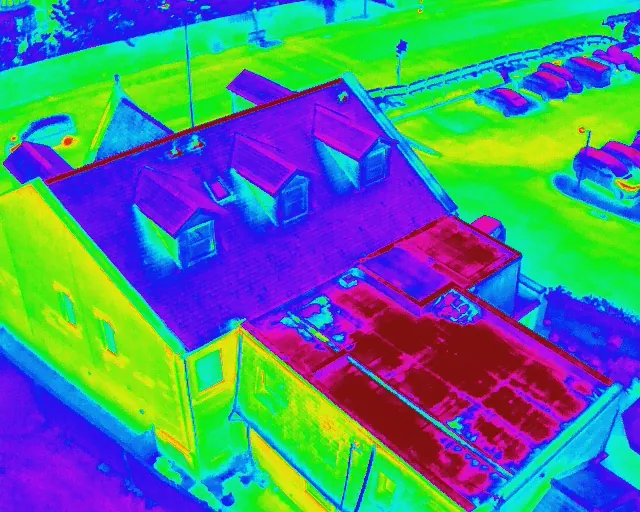
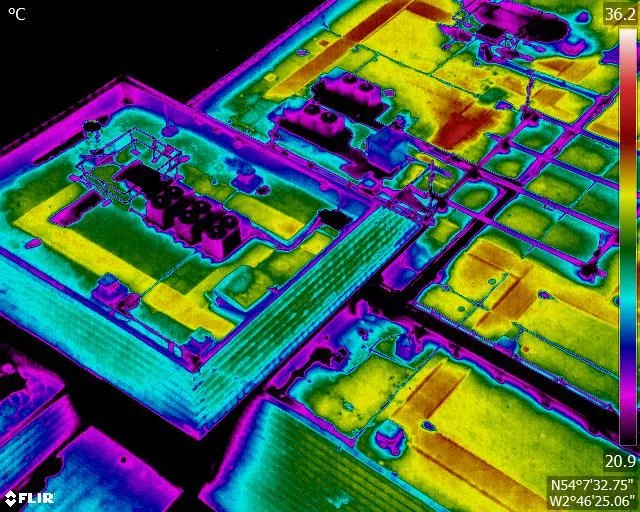
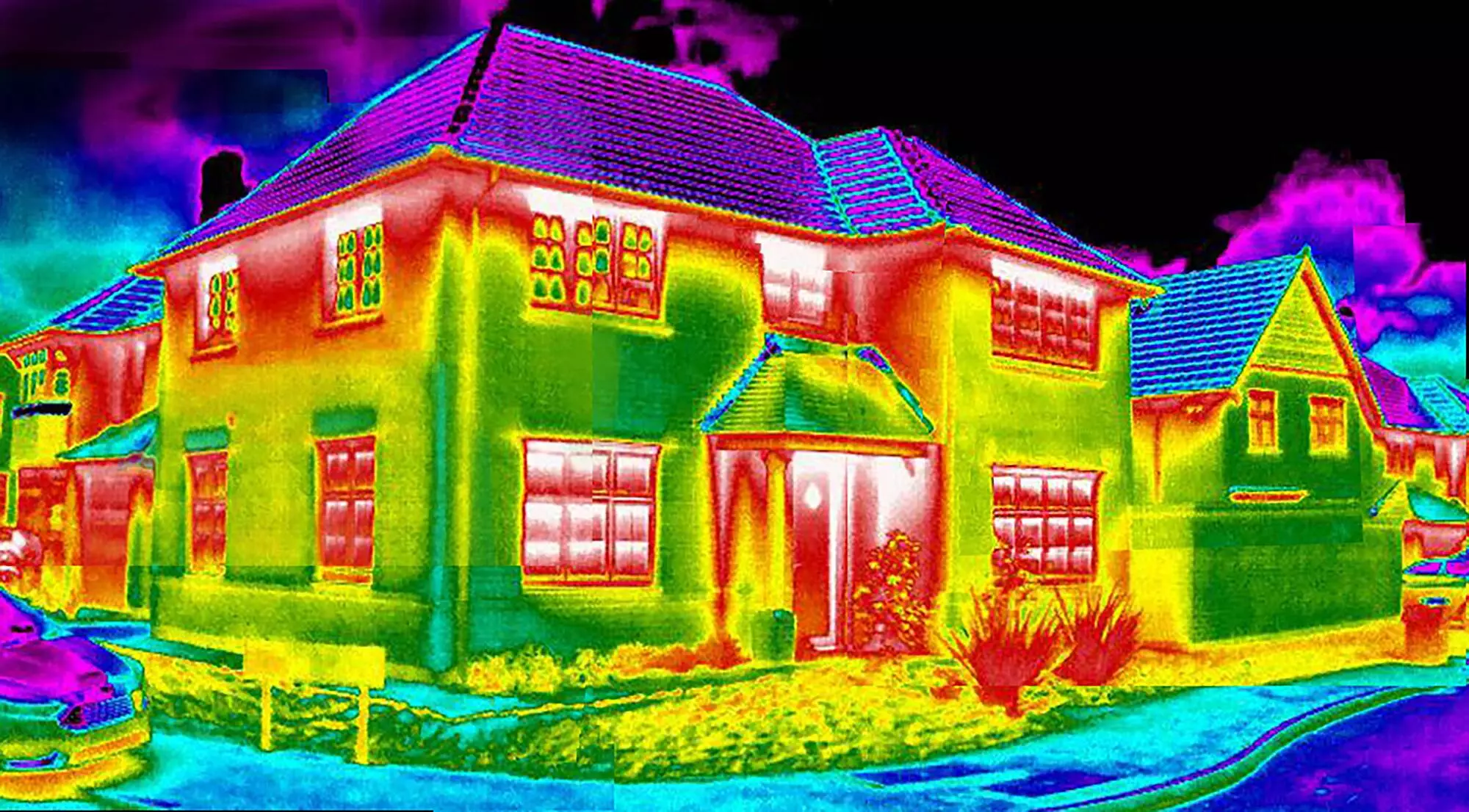
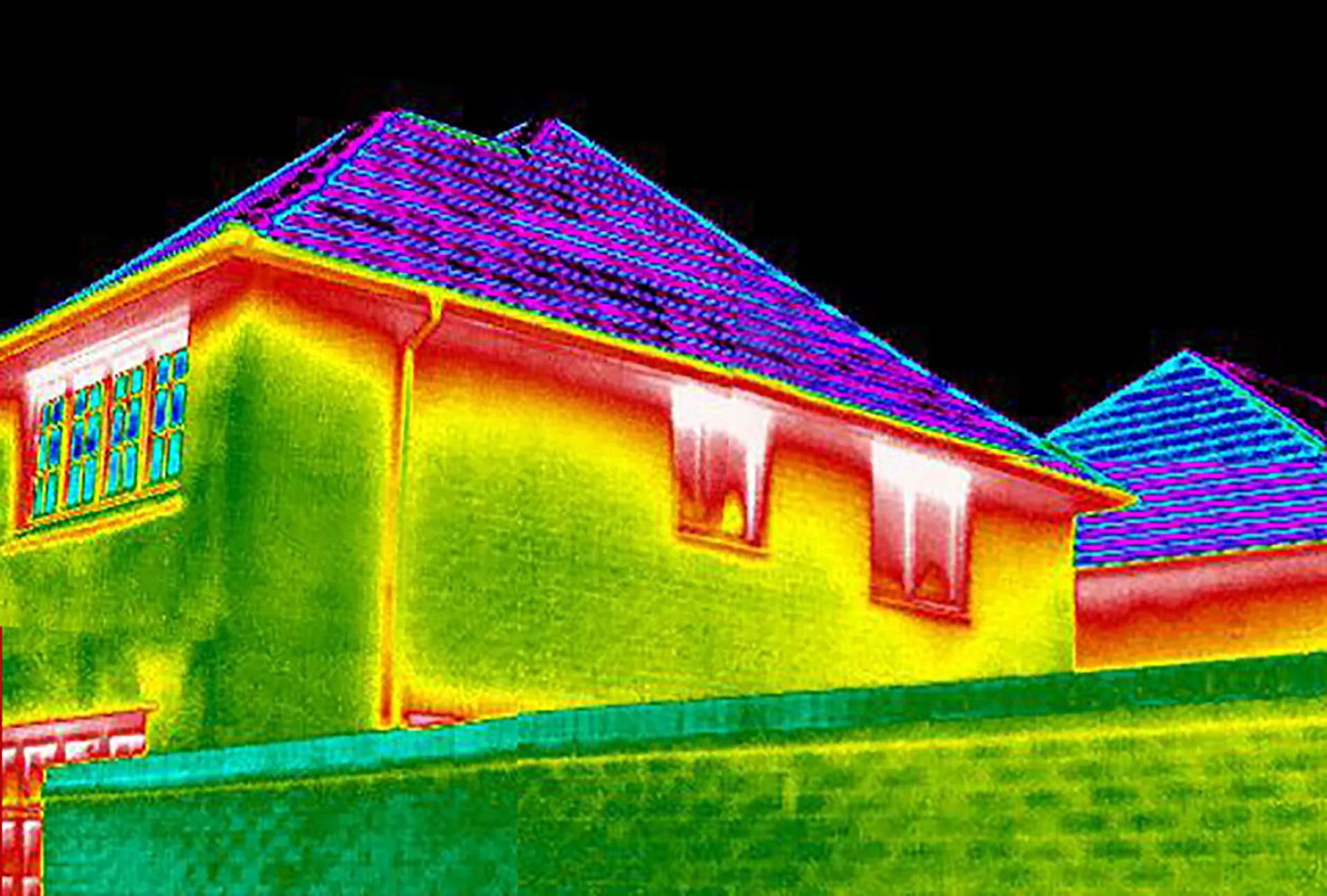
A heat loss survey uses thermal imaging to show where warmth is escaping from a building. Under the right conditions, a thermal camera sees what the naked eye can’t: missing insulation, thermal bridging, air leakage and failing windows.
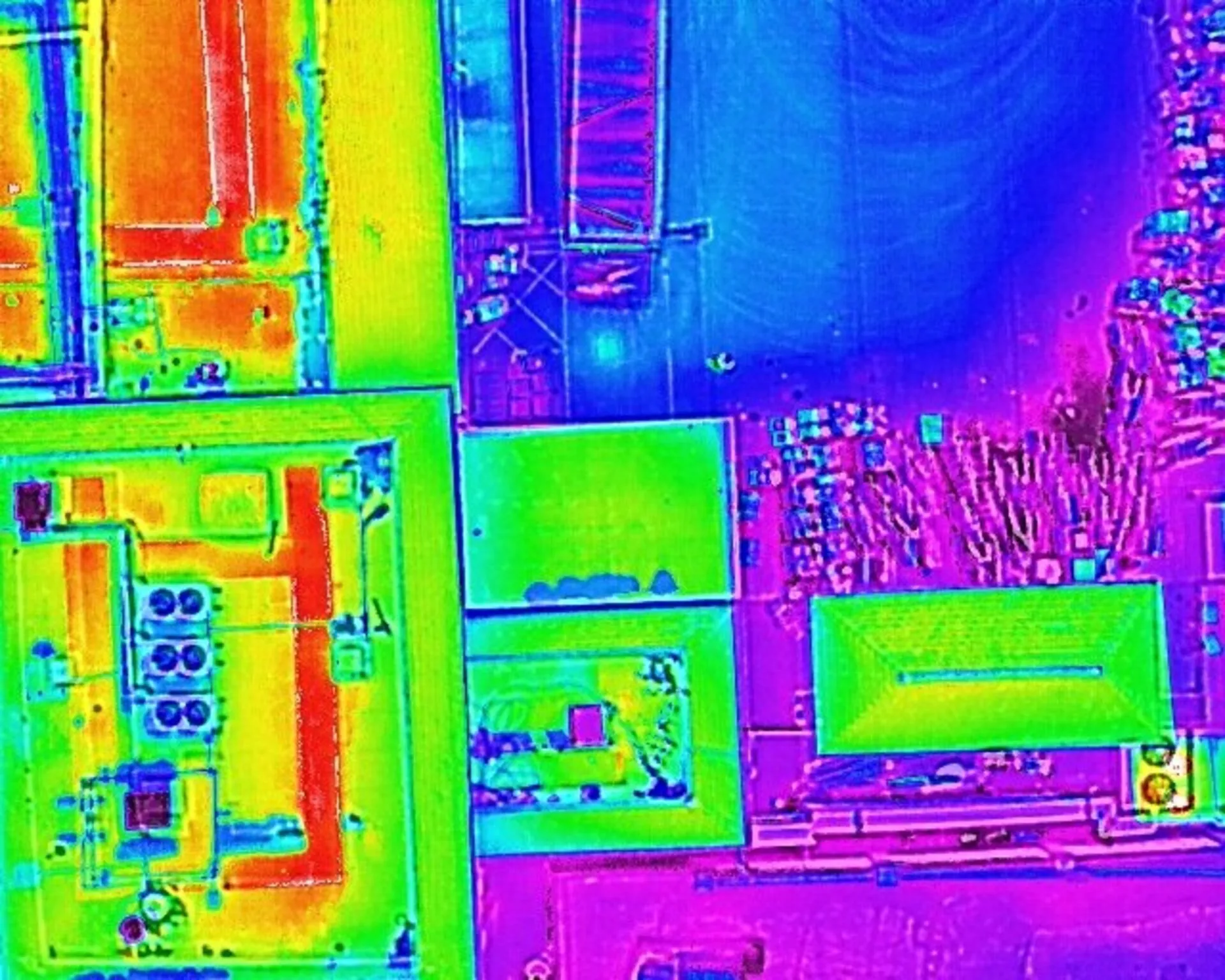
We capture every elevation and the roof by drone, then our Level 2 qualified thermographers thermally tune the images, narrowing the temperature scale to strip out background noise so the real anomalies stand out.
The result is clear evidence of where to invest in insulation and repairs, helping cut energy bills, improve comfort and support EPC and retrofit planning.
Example Image Quality
Click each image to view example image quality
What Your Heat Loss Survey Includes
Every heat loss survey pairs thermally tuned images with matching 4K visuals, delivered digitally and ready to share.
| Deliverable | What it is | Included |
|---|---|---|
| Radiometric thermal imagery | Temperature data in every pixel, recording the highest and lowest temperatures across each image. | Standard |
| Thermally tuned images | Images with the temperature scale narrowed by our thermographer, so heat loss stands out clearly. | Standard |
| Matching UHD 4K imagery | Visual images of the same areas, so every anomaly can be located on the building. | Standard |
| Digital delivery | A secure download link, ready to share with contractors, retrofit assessors or colleagues. | Standard |
| Thermographer’s report | Written observations and recommendations from our Level 2 qualified thermographer. | Optional |
| Internal thermal inspection | Room-by-room thermal images to confirm anomalies found from outside. | Optional |
| Post-works survey | A repeat survey after insulation or repairs, to confirm the improvement. | Optional |
Heat loss surveys need at least a 10°C difference between inside and outside, so they’re carried out between autumn and spring, usually after dark with the heating on.
At a Glance
Capture
Thermal + 4K
Access required
Usually none
Best season
Autumn–spring
Analysed by
Thermographer
Scaffold needed
None
Coverage
Mainland UK
Get a Quote
Send us an address. We will come back the same working day with a price and a scope.
Where Buildings Lose Heat
Every building loses heat somewhere. A heat loss survey shows where, and how badly. Common problem areas include:
Heat loss means higher energy bills, cold spots that can lead to condensation and mould, and a bigger carbon footprint. Knowing where it’s happening lets you fix the right things first.
The result?
A clear picture of where your building is losing heat, so insulation and repairs go where they’ll make the most difference.
__ Landlords & housing providers
Support EPC and damp compliance
The government has confirmed that privately rented homes in England and Wales will need to reach EPC band C by October 2030. For social landlords, Awaab’s Law has set strict timescales for dealing with damp and mould since October 2025, with later phases extending to other hazards, including excess cold.
A heat loss survey helps you find the cold spots, missing insulation and thermal bridges behind these problems, and prioritise work across your portfolio.
Target improvement work where it’s needed, backed by clear thermal evidence.
CAA
CAA Operational Authorisation 11363
Fully insured, with £10m public liability and specialist UAV cover
__ Why drones
Why use a drone for your heat loss survey?
From the ground, you can’t properly see heat escaping through the roof or upper storeys. A drone captures every elevation and the whole roof from the right angle, in a single visit.
- No one at height. Roofs and upper storeys are captured without ladders or scaffolding.
- Whole building, one visit. Every elevation and the roof, from the ideal angle.
- Nothing invasive. Heat loss is found without opening up walls or lofts.
- Thermally tuned results. Our thermographers make the real problems stand out.
- Built for portfolios. Survey whole streets or estates far faster than from the ground.
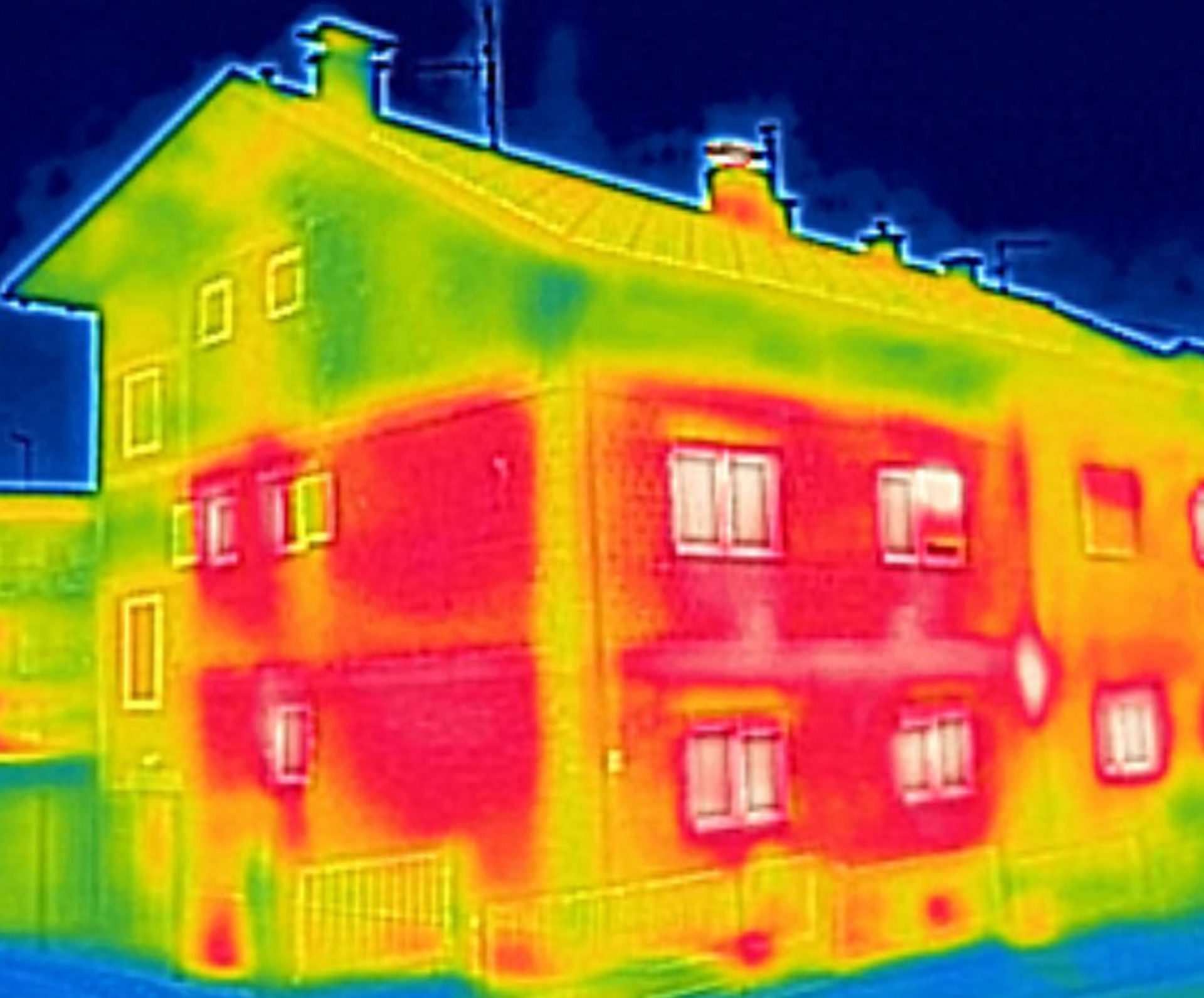
Heat escaping from every elevation, with no one working at height.
Sectors We Cover
Heat loss surveys for homes, landlords & businesses
We carry out heat loss surveys for homeowners, private landlords, housing associations, local authorities and commercial property owners across the UK.
Our service is suitable for
- ›Offices and commercial premises
- ›Warehouses, factories and industrial buildings
- ›Retail units, shopping centres and retail parks
- ›Residential apartment blocks and housing developments
- ›Housing association and social housing properties
- ›Schools, colleges, universities and education estates
- ›Hospitals, clinics and other healthcare buildings
- ›Local authority and public-sector buildings
- ›Historic, heritage and listed buildings
- ›Hotels, leisure centres and hospitality properties
- ›Care homes and assisted-living facilities
- ›Distribution centres and logistics hubs
- ›Churches and places of worship
- ›Agricultural and rural buildings
- ›MOD, defence and secure estate buildings
- ›Prisons and custodial facilities
- ›Construction sites and newly completed developments
- ›Multi-site commercial and residential property portfolios
For clients with assets spread over large areas, we build a consistent visual library of the external envelope of every asset, helping teams compare condition and prioritise maintenance.
__ Why choose us
Why choose Drone Site Surveys?
Drone Site Surveys specialises in professional survey and inspection data capture rather than general aerial photography.
Our pilots work specifically across commercial and domestic properties, as well as building, construction and land surveying environments. With experience in roof and façade inspections, they understand how to capture clear, relevant imagery that supports practical condition assessment, defect identification and informed decision-making.
Clients choose Drone Site Surveys for our specialist experience, professional standards and independent approach:






__ How it works
Our heat loss survey process
From first enquiry to secure delivery, every survey follows the same six steps, so you always know what happens next and when.
Tell us about the property
Email us the address with postcode and what you need, whether that’s a single building or a whole portfolio. We’ll come back with the options available.
Planning and quote
We carry out a desktop assessment of the property and the surrounding airspace, check the survey against current UK drone regulations, and prepare your quote. You receive it by email with no obligation, along with the airspace map for your site and an example delivery so you can see exactly what you’ll be getting.
Booking your date
Once you’re happy with the quote we add your job to the schedule and start monitoring the Met Office forecast. In the meantime we prepare the pre-flight paperwork, including our risk assessment and method statement (RAMS), which we can send over for your records. As soon as we have a clear weather window and pilot availability, we confirm your attendance date. You don’t normally need to be on site.
The survey
Our CAA approved pilot captures every elevation and roof area in radiometric thermal and UHD 4K, after dark with the heating on, for accurate readings.
Processing
Every image is checked and organised into colour-coded folders. Any thermal analysis or reporting you’ve asked for is completed at this stage.
Delivery
We email you a link to our secure online portal, where your imagery, reports and any other agreed outputs are ready to view, download and share with your team or contractors. Alongside the deliverables you’ll find a folder containing the pre-flight paperwork, a copy of the drone airspace map for your site and any other relevant documents, so everything from the survey is in one place.
__ Request a Quote
Request a heat loss survey quote
Whether you want to cut your energy bills or plan improvements across a whole portfolio, we can tailor the survey to your buildings and your requirements.
Send us the address and a brief description of what you need, and we will come back with clear pricing and deliverable options.
Prefer to Speak to Us?
If you’d rather speak to one of the team, that’s no problem. Simply call the number below and one of our team will be more than happy to help.
Get a Quote
__ In The Know
Frequently Asked
Questions
Answers to the questions we are asked most often about heat loss surveys. If yours is not covered here, give us a call.
What is a heat loss survey?
A heat loss survey uses a thermal camera to show where warmth is escaping from a building. It highlights missing insulation, thermal bridging, air leakage and other defects that can’t be seen with the naked eye.
What does “thermally tuned” mean?
Each thermal image records a range of temperatures. Our thermographers narrow that range to remove background noise, so the areas losing heat stand out clearly.
When is the best time for a heat loss survey?
There needs to be at least a 10°C difference between inside and outside temperatures, so surveys are carried out between autumn and spring, usually after dark with the heating on. Surfaces need to be dry and it can’t be too windy.
Can a heat loss survey help with EPCs and retrofit?
A thermal survey doesn’t replace an EPC or a retrofit assessment, but it gives you visual evidence of where the building is losing heat, helping you and your assessor decide which improvements to prioritise.
How is a heat loss survey different from a thermal survey?
A heat loss survey is a type of thermal survey focused on energy loss. A general thermal survey can also look for water ingress, damp and other defects. Find out more about thermal surveys.
Can a heat loss survey check insulation after retrofit?
Yes. A survey after the works shows whether insulation is continuous and where gaps or thermal bridges remain. Comparing before and after surveys gives a clear picture of what the work has achieved.
Can you survey a whole portfolio?
Yes. Drones can cover whole streets and estates quickly, helping housing providers and landlords find the properties losing the most heat.
Do I need to be there during the survey?
Not usually, but we’ll ask for the heating to be on for several hours beforehand, so there’s a good temperature difference. We just need safe access to a take-off area nearby.
What will I receive?
A report from our Level 2 qualified thermographer, with thermally tuned images showing where heat is escaping and an explanation of the likely cause.